mostra "Convivium: Food Systems at the Limit”, Pinakothek der Moderne, Monaco di Baviera, 2026 (© Nikolai Rusu)
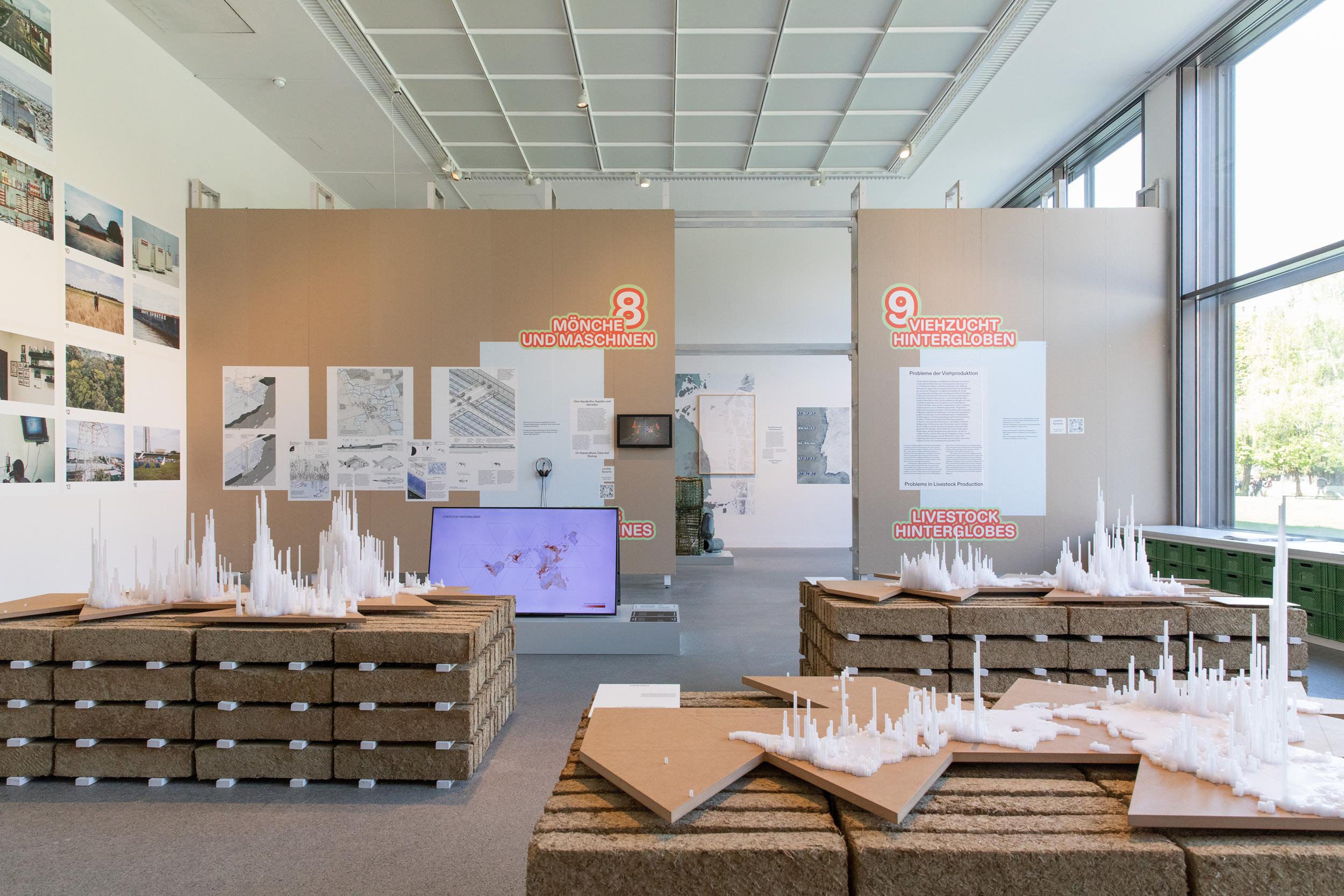
An exhibition at the Pinakothek der Moderne explores, through twelve thematic chapters, the complex network that lies behind the apparent banality of food, tracing the connections that span territories, economies and continents
This article is part of a special project by giornaledellarchitettura.com, developed in collaboration with the research team led by Sofia Nannini at the Politecnico di Torino. The focus of this initiative is the in-depth exploration and dissemination of the results of an innovative and highly topical program, with an international perspective and approach. “Animal Farm: An Architectural History of Intensive Animal Farming (1570–1992)” examines the (hidden and often overlooked) spaces of the livestock industry, along with its paradoxes and impacts. It offers a cross-cutting interpretative framework that sheds light on key and decisive aspects of contemporary societies, economies, and landscapes.

“Convivium: Food Systems at the Limit” at the Pinakothek der Moderne in Munich, curated by Andjelka Badnjar and Andres Lepik, is not about food in its final commodity form. It is about the infrastructures, technologies, logistics, and ecological relationships that make possible the production of our daily consumption.
Behind the supposed banality of a glass of milk or a strawberry lies a complex network that spans territories, economies, and continents. The exhibition reconstructs these nodes through twelve thematic chapters, weaving together architectural research with multimedia journalism, cartographic investigations and artistic installations. Distilling a concept developed by Timothy Morton, the exhibition recognizes these foodstuffs as “hyperobjects”: as material condensations of processes that exceed our immediate perception, and which connect environmental degradation and the exploitation of natural to agricultural resources, migration, and human labor.
Salmon and tomato, extremes of the same global chain.
One such thematic chapter titled The Salmon and the Tomato, which displays the work of photojournalist Neal Haddaway developed together with José Luis Vicente Vicente and María D. López-Rodríguez, takes visitors inside the kitchens and living spaces of those who live and work among the more than 32,000 hectares of greenhouses in Almería, southern Spain. The installation reconstructs the everyday spaces of communal life on a 1:1 scale using chairs, stoves, textiles, teacups, and teapots collected from the informal settlements that have germinated around these greenhouses. Haddaway’s visual and installation work temporarily interrupts the display of maps and technologies that constitute most of the rest of exhibition, redirecting attention from the political economy to the lives of the people who inhabit and sustain the production of global food chains. Convivium, for which the exhibit is named, refers to the practice of sharing and gathering around food. The chapter’s shift to individual lives is a nod to the idea that one of the most radical practices within our entire food system is the quotidian act of sitting together at a table, preparing a meal, and sharing it.
The exhibit effectively transitions between local and global scales. Europe writ large is the exhibition’s primary field of observation; yet every case study reveals dependencies that extend beyond national borders. Putting salmon next to tomatoes, the exhibition highlights the unruly consequences of contemporary food systems. Intensive salmon farming in countries such as Norway relies on fishmeal caught off the coast of West Africa. Growing demand for these feed resources places increasing pressure on the ecosystems and local economies of coastal communities, driving some people to migrate in search of alternative livelihoods. Ultimately some of these individuals ultimately become part of the agricultural supply chains that supply Northern European markets. Salmon and tomatoes become two ends of the same global chain, marking a strange but sure connection between ecosystems, labor, mobility, and kinds of consumption.
Separation, Confinement, and Animal Care in Intensive Farming
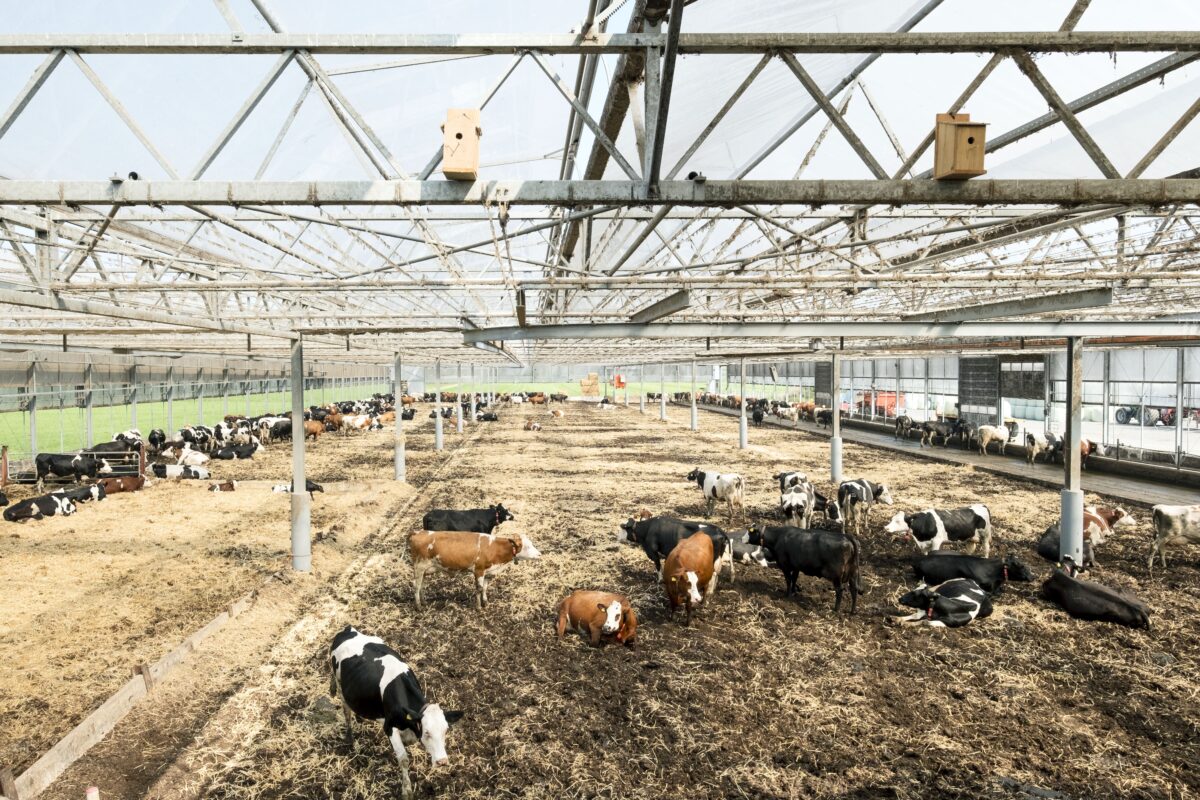
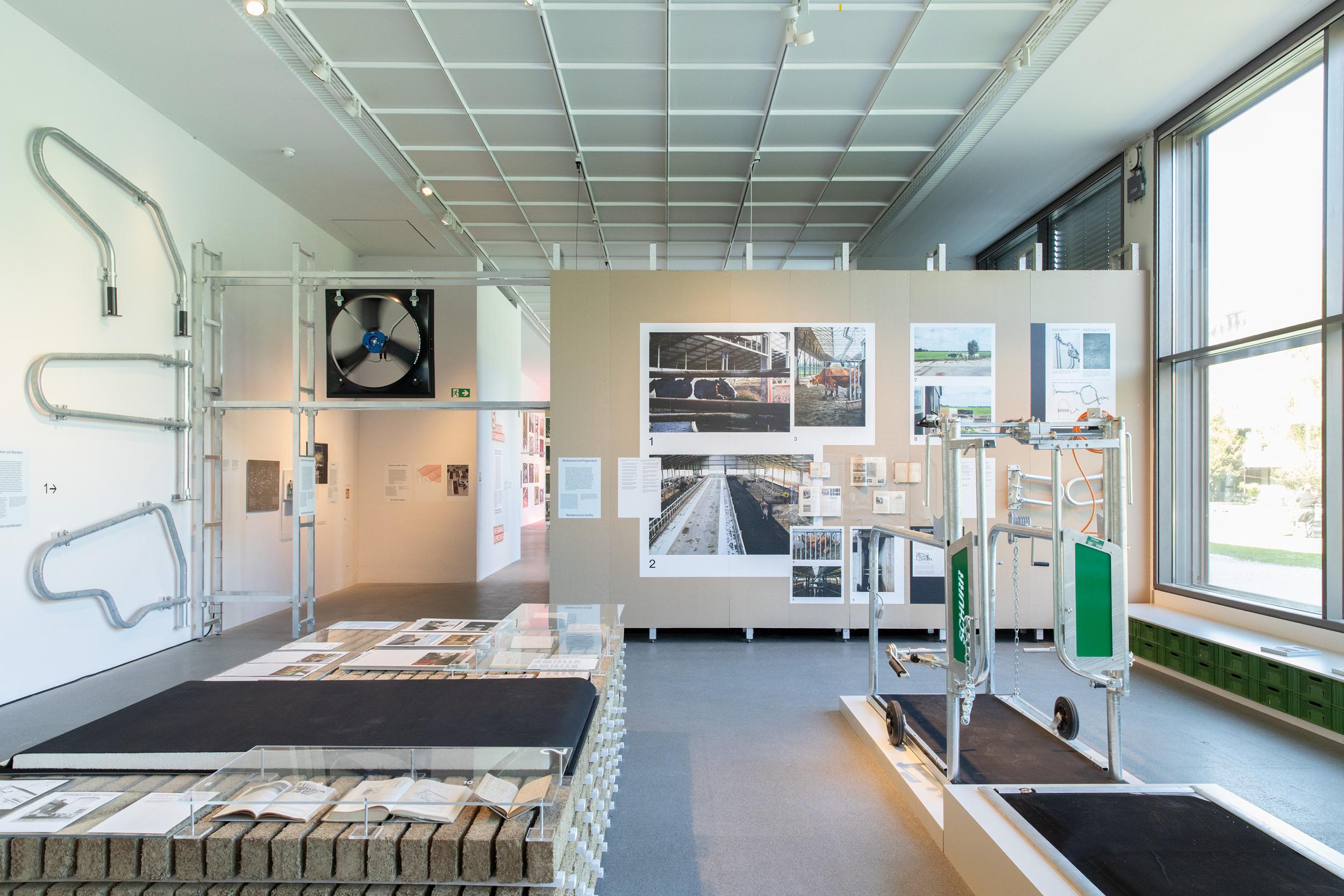
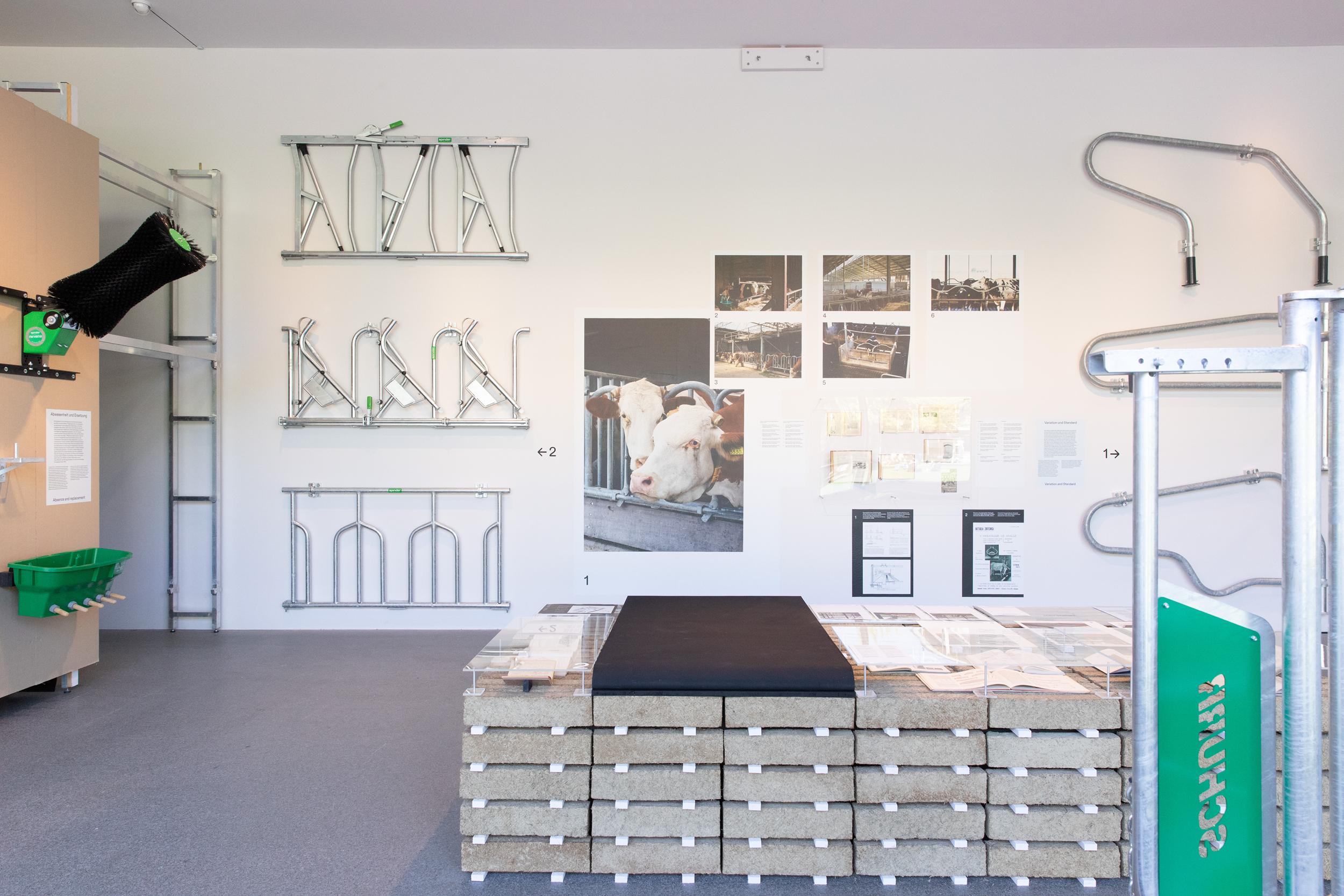
A further dimension of these dynamics emerges in another of the exhibition’s chapters, titled The Animal is Present, curated by Victor Muñoz Sanz and Sofia Nannini. Taking visitors inside modern cattle barns with videos, documents, and structures such as fences, ventilation systems, and rubber mats, the chapter invites reflection on old and new technologies of separation, immobilization, and care that are employed in the business of industrial livestock farming. The concept of standardization leaps out at the viewer from the artefacts: an “ideal type” (true type) of an industrial nature has been constructed, around which spaces, machinery, and production protocols are designed.
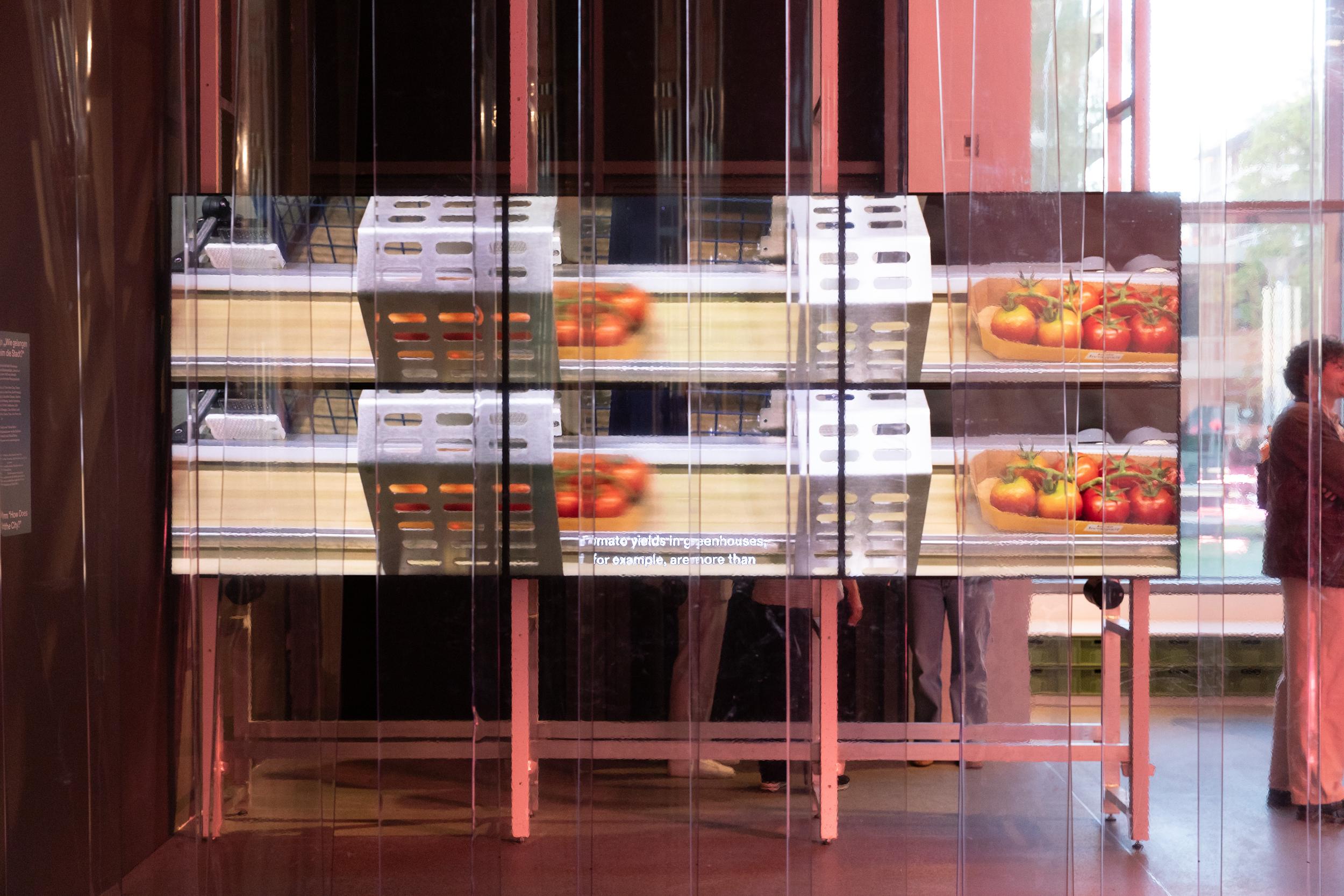
The aspiration toward standardization ultimately, of course, is left wanting. A long documentary take of robotic milking systems reveals that, despite the high degree of automation and technological sophistication involved, the relationship between machine and animal is far from seamless. Mechanical milking devices struggle to locate udders correctly or remain attached longer than necessary, and cows attempt to evade the machines. These seemingly minor moments of friction reveal the forms of resistance that emerge when living bodies and technological systems are forced to operate through logics of maximum efficiency.
Waste, Surplus, and By-products as Part of the Narrative
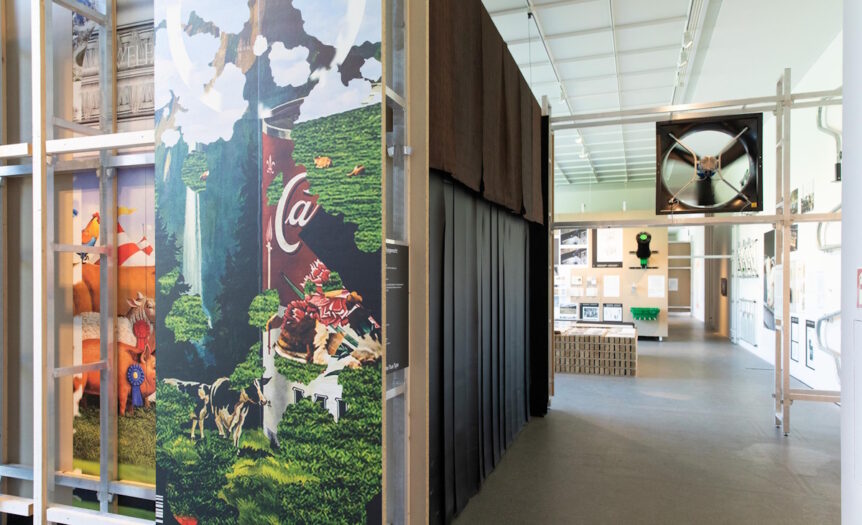
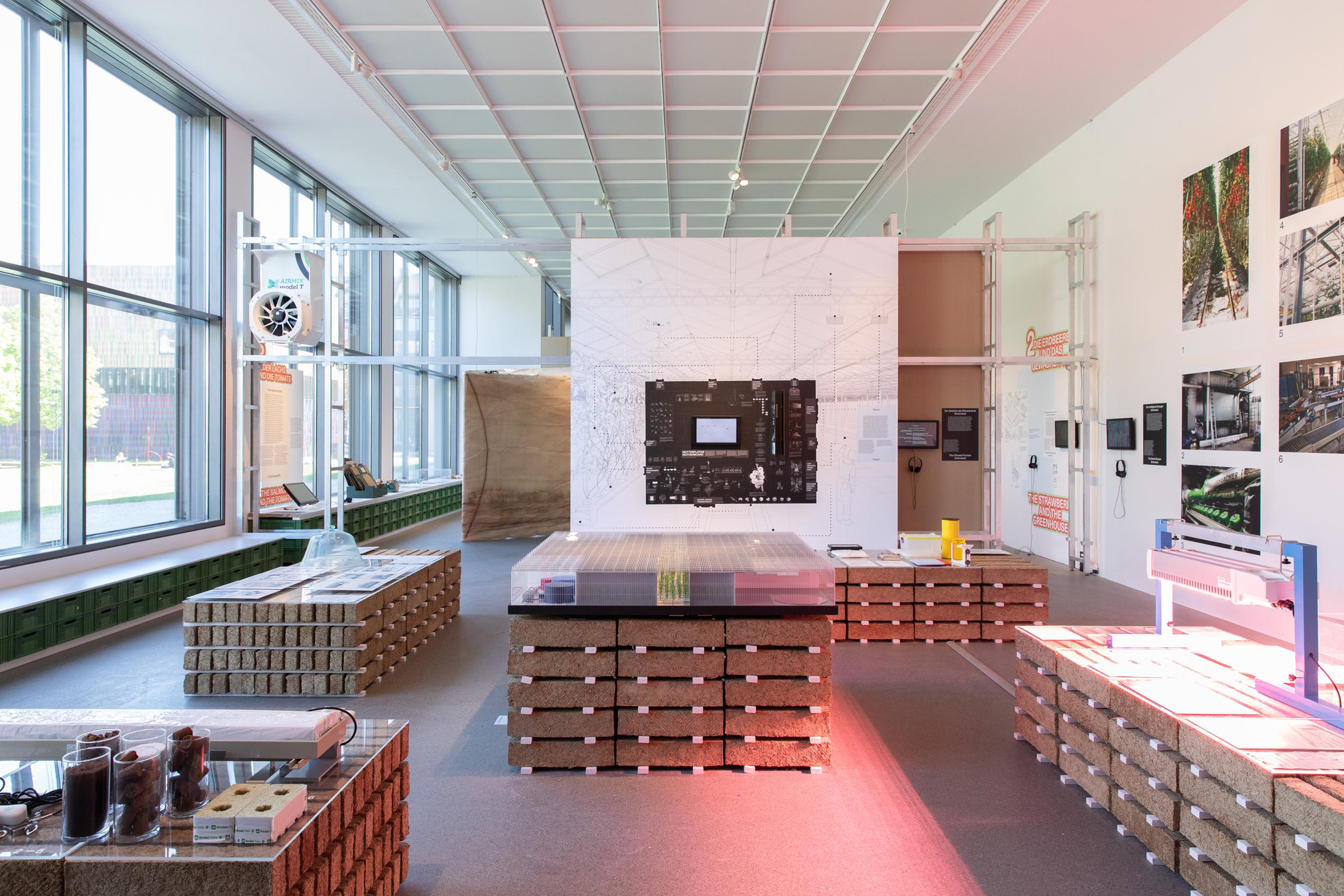
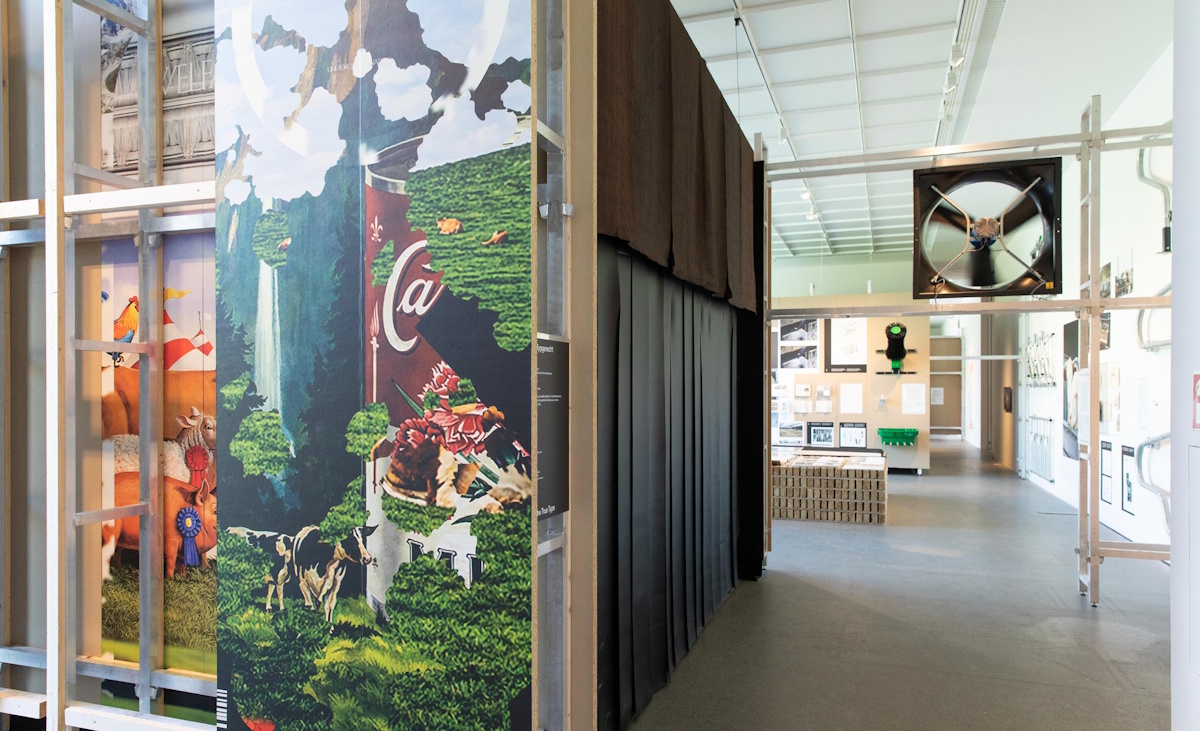
The heterogenous nature of the materials used to structure the exhibition’s twelve chapters are worth noting. It does not merely narrate contemporary food systems; it physically incorporates their waste, surpluses, and by-products. Many of the platforms, walls, and suspended ceilings were designed and built by architecture and design students from the Technical University of Munich (TUM) using residual materials from the agri-food industry. Shopping bags compose the ceiling of the entrance area; straw is transformed into bricks, as are the plastic crates ubiquitous in the fruit and vegetable sector; wool is used to create stools, and some surfaces are made from earthen composites. Three types of textile sails accompany visitors through the exhibition’s more intimate and darker spaces, such as rooms dedicated to video and audio installations. Produced from waste materials and a biodegradable mixture developed specifically for the project, these sails take on different characteristics according to the themes of the sections they inhabit, incorporating pigments derived from slaughterhouse blood, cattle feed, or marshlands.
The decision to work with materials generally regarded as waste gives the exhibition an almost metabolic quality. The architecture of the exhibition itself ceases to function as a neutral support and instead becomes a skeletal support that structures the story of a specific geography of production, transforming the display into a corporeal archive of contemporary food systems. While the use of biomaterials evokes a faint trace of the earthy smell characteristic of some of the environments being represented, it also reveals the challenge of conveying the full sensory range of the places at the heart of the exhibition.
Although some chapters illustrate how heat, light, humidity, and biological rhythms are treated as parameters to be monitored and optimized in greenhouses and industrial livestock facilities, non-visual sensory experience of these environments is largely absent from the exhibition. The noise of machinery, odors, dust, and the sweat of labor stay at the margins of the exhibition experience. Even the sound installation Technominotaurus by Daniel Szálai, dedicated to practices of artificial bovine insemination, is heard as somewhat acoustically restrained, gesturing towards rather than reincorporating the auditory complexity of these contexts.
A Continuous Confrontation with Absence
Convivium does not aspire to be exhaustive. The rich collection of chapters counterintuitively makes tangible the impossibility of constructing a comprehensive anatomy of contemporary food systems. While the exhibition addresses the effects of the war in Ukraine on grain exports and global food security, it pays less attention to other ongoing conflicts in which the import and export of food has become a tool of control and violence.
Precisely because of its broad and ambitious analytical framework and evidentiary excess, the exhibition encourages visitors to continually confront an absence—to engage with what is (still) not shown. The narrative of the industrial sensorium unfolds through clues and fragments of these intensities: tiny human figures inside miniature greenhouses, a solitary shoe placed inside a bucket filled with soil, and fences from the dairy industry cleaned of every trace of use become stand-ins for agricultural and industrial labor. Shrouded in the data, technological objects, and infrastructural analyses, one is left with a faint but palpable sense that the full vitality of the agricultural world apparently on display remains out of frame.
Cover image: © Nikolai Rusu
“Convivium: Food Systems at the Limit”
fino al 18 ottobre 2026
Pinakothek der Moderne
Barer Straße 40, Monaco di Baviera
Curators and Project Management: Andjelka Badnjar and Andres Lepik
Co-curators for the Exhibition Segment “The Animal Is Present”: Víctor Muñoz Sanz and Sofia Nannini
Exhibition Design: Amelie Steffen, Maximilian Atta, and Jan Müller
Graphic Design: strobo B M Visual Communication
Photography: Nikolai Rusu
www.pinakothek-der-moderne.de/en/exhibitions/convivium
- Article in Italian: Convivium, anatomia di un sistema alimentare esausto
- Read full “Anilam Farm” Repository
Autore
About Author